
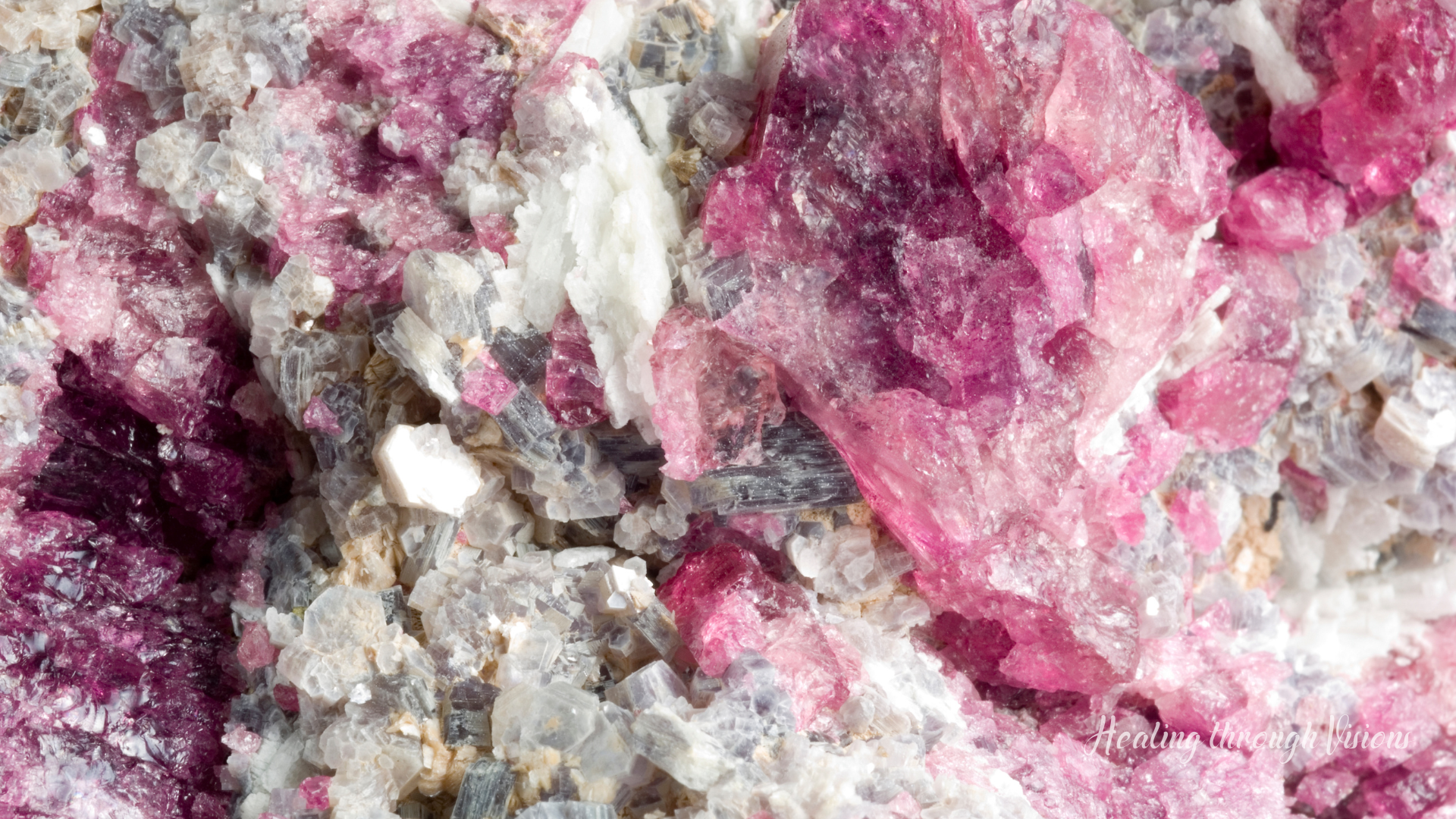
Pink Tourmaline
Exploring Self-Love, Compassion and Emotional Healing
Love is one of the most expansive experiences we can cultivate, yet our relationship with love is not always simple. Past experiences, emotional wounds, expectations and personal beliefs can influence how we love ourselves, connect with others and receive love in return.
What happens when we become curious about these patterns? What becomes possible when we create space to understand our emotions rather than immediately trying to change or release them?
Pink Tourmaline offers an opportunity to explore these questions through spiritual reflection, intention and mindful practice.
At Healing through Visions, we recognize crystals as tools for personal exploration and spiritual connection. Their symbolism can provide meaningful focal points for meditation, self-discovery and intentional living.
In this crystal feature, we explore Pink Tourmaline’s spiritual associations, its connection to the heart chakra and practical ways to incorporate it into everyday life. We also explore self-acceptance, compassion, forgiveness and the role these experiences may play in personal transformation.
Understanding Pink Tourmaline and its Spiritual Properties
Pink Tourmaline belongs to the tourmaline mineral family and appears in shades ranging from pale pink to vibrant rose and deep reddish pink. Its rich colors and natural variations contribute to its beauty, making it a meaningful addition to personal crystal collections, meditation spaces and spiritual practices.
In crystal healing traditions, Pink Tourmaline is associated with love, compassion, emotional awareness and the heart chakra.
The heart chakra, known as Anahata in Sanskrit, is traditionally associated with our capacity to give and receive love, experience compassion and cultivate meaningful relationships. In spiritual practices that work with the chakra system, this energy center is located around the center of the chest.
Pink Tourmaline’s connection to the heart chakra invites us to explore several interconnected themes:
- Self-Love and Acceptance: Developing a deeper relationship with ourselves, recognizing our needs and honoring our experiences.
- Compassion and Forgiveness: Exploring understanding, emotional complexity and our personal relationship with forgiveness.
- Emotional Awareness: Recognizing emotions as valuable information that can support reflection and intentional choices.
- Spiritual Connection: Exploring intuition, inner wisdom and the values that guide our lives.
These associations provide different entry points for exploring our relationship with ourselves.
Self-love is an ongoing practice that extends beyond affirmations and positive feelings. It includes recognizing our needs, understanding our patterns and making choices that support our wellbeing.
Consider what self-love looks like in everyday life. It may involve honoring a boundary, accepting support, allowing yourself to rest or acknowledging an emotion that requires your attention.
Compassion creates room to recognize the complexity of our experiences. We may acknowledge pain while developing a deeper understanding of the circumstances, beliefs and relationships that shaped us.
Forgiveness is another deeply personal experience. For some, it becomes part of their healing process. For others, healing may involve acceptance, boundaries, grief or choosing a different relationship with the past.
We have the authority to determine what forgiveness means in our own lives.
This perspective invites us to recognize emotions as valuable sources of information. Feelings of love, anger, grief, uncertainty and compassion may reveal something about our needs, experiences and relationships.
During meditation or reflection, Pink Tourmaline can serve as a symbolic companion, inviting curiosity about what we are experiencing and how we want to respond.
We bring our awareness, intention and personal meaning to the practice.
Working with Pink Tourmaline in Everyday Life
There are several ways to incorporate Pink Tourmaline into personal and spiritual practices. Each approach offers an opportunity to connect an intention with a meaningful action.
Meditation and Heart-Centered Awareness
Meditation creates space to observe our internal experiences with greater awareness.
To incorporate Pink Tourmaline into meditation:
- Find a comfortable position and hold the crystal in your hand or place it near your heart.
- Bring your attention to your breathing and notice the sensations present in your body.
- Choose an intention, such as cultivating compassion, exploring forgiveness or becoming more receptive to love.
- Visualize pink light expanding around your heart center, representing the compassion, understanding and acceptance you are cultivating.
- Remain present with your experience, noticing any emotions, memories or physical sensations that arise.
Allow your experience to unfold naturally. You may discover a new perspective, experience an emotional response or simply appreciate the opportunity to spend time with yourself.
Carrying Pink Tourmaline as a Daily Reminder
A crystal does not need an elaborate ritual to hold personal meaning.
Carrying Pink Tourmaline in a pocket, purse or piece of jewelry may provide a tangible reminder of an intention you are practicing.
During moments of stress or emotional activation, holding the crystal can become an opportunity to reconnect with your body and assess what you need.
Consider asking yourself:
- What am I experiencing in this moment?
- What is this emotion communicating to me?
- What would support me right now?
- How do I want to respond?
These moments of intentional awareness connect spiritual practice with everyday decisions.
Creating a Pink Tourmaline Crystal Grid
Crystal grids combine stones, symbolic arrangements and focused intentions into a visual spiritual practice.
Pink Tourmaline may serve as the central stone in a grid dedicated to self-love, emotional awareness or compassion. Rose Quartz and Green Aventurine are other crystals traditionally associated with the heart chakra and may complement the symbolism of Pink Tourmaline.
To create your crystal grid:
- Choose your intention. Reflect on what you want to explore or cultivate, such as self-acceptance, compassion or emotional clarity.
- Prepare your space. Select a comfortable surface where you can arrange your crystals and return to your practice.
- Position Pink Tourmaline. Place it at the center of your arrangement as a symbol of your primary intention.
- Arrange your supporting crystals. Position Rose Quartz, Green Aventurine or other meaningful stones around Pink Tourmaline in a pattern that resonates with you.
- Connect with your intention. Spend a few moments observing the arrangement, breathing and reflecting on what each crystal represents.
- Return to your practice. Leave the grid in place for a period that suits your space and revisit it during meditation, journaling or reflection.
For example, Pink Tourmaline may symbolize self-acceptance, Rose Quartz may represent compassion and Green Aventurine may symbolize growth and openness to new experiences.
After completing your grid, consider one action that reflects your intention. If your focus is self-compassion, this might involve honoring a need you have overlooked, adjusting an expectation or making space for an experience you have been processing.
This connects the symbolic practice with your choices and experiences beyond the crystal grid.
Placement in Your Home or Workspace
Pink Tourmaline can also become part of an intentional environment.
Consider placing it in locations that reflect how you want to connect with yourself:
- Bedroom: A reminder to honor rest, emotional awareness and the relationship you cultivate with yourself.
- Meditation Area: A focal point for spiritual reflection, visualization and personal intentions.
- Workspace: A visual reminder to practice compassion, establish boundaries and remain connected to your values.
- Personal Altar: A symbolic representation of love, growth, connection and the experiences you are honoring.
- Journaling Space: An invitation to explore your thoughts, emotions and evolving understanding of yourself.
The placement becomes meaningful through your intention and your relationship with the space.
Pink Tourmaline and Emotional Healing
Meditation has been an important part of my personal and spiritual development for many years. Throughout my practice, I have explored different tools that support reflection, emotional awareness and my connection with myself.
Pink Tourmaline became one of those tools. When I first began working with Pink Tourmaline, I carried it in my purse and incorporated it into my daily routine. During moments when I felt overwhelmed or stressed, I would hold the crystal and focus on its associations with love and compassion. This practice provided an opportunity to reconnect with my intentions and approach challenging experiences with greater awareness.
One of my most meaningful experiences with Pink Tourmaline involved creating a love altar during a difficult breakup. I arranged Pink Tourmaline alongside other crystals associated with the heart chakra and used the altar as a focal point for meditation. At the time, I was exploring feelings of guilt, shame and emotional pain. Creating this intentional space helped me direct my attention toward the relationship I was developing with myself.
I reflected on what I was carrying, what I was learning and what I wanted to cultivate in the next chapter of my life. Looking at this experience from a broader perspective, I recognize something important about the relationship between spiritual tools and personal transformation. The crystal served as a point of connection, while my participation in the practice created opportunities for reflection and understanding. I was actively engaging with my emotions, examining my experiences and cultivating a different relationship with myself.
I recognize that the tools I choose are part of my practice, while my awareness, participation and willingness to explore myself shape how I experience transformation.
Color visualization is another practice I associate with Pink Tourmaline. During meditation, I may imagine different shades of pink surrounding my heart center, representing love, compassion, emotional openness and self-acceptance. I explore the movement, brightness and intensity of the color while remaining aware of my breathing and physical sensations. The visualization becomes a personal expression of the intention I am cultivating.
Affirmations can complement this practice by giving language to the experiences and qualities we want to explore.
The following 8 affirmations progress from self-awareness and acceptance toward compassion, discernment, meaningful connection and expansion:
- I honor my emotions and welcome a deeper understanding of myself.
- I give myself permission to grow beyond familiar patterns.
- I am worthy of love, compassion and meaningful connection.
- I approach forgiveness with compassion, discernment and personal authority.
- I cultivate a loving relationship with myself through my choices and actions.
- I recognize my capacity to give and receive love.
- I welcome relationships that reflect care, honesty, respect and reciprocity.
- I remain open to the many ways love can expand in my life.
Choose affirmations that resonate with your current experience or create your own. You may repeat them while holding Pink Tourmaline, incorporate them into journaling or use them as intentions during meditation. An affirmation can also become a question for deeper exploration.
For example, I recognize my capacity to give and receive love may invite you to examine how you currently experience receiving support, affection and care. This creates an opportunity to move from intention into greater self-awareness and meaningful action.
Integrating Your Practice
Caring for Pink Tourmaline includes maintaining the physical condition of the crystal and deciding how you want to approach spiritual cleansing.
These are separate practices that may complement one another.
Physical Cleaning and Care
Tourmaline has a hardness of approximately 7 to 7.5 on the Mohs scale, making it suitable for many forms of jewelry and personal use. However, it can still experience scratches, fractures or damage from improper handling.
For ordinary untreated tourmaline, warm water with mild soap is generally recommended for physical cleaning.
A few practical care considerations include:
- Use warm water, mild soap and a soft cloth or brush for routine cleaning.
- Rinse carefully and dry the crystal thoroughly.
- Avoid ultrasonic and steam cleaners, extreme heat and sudden temperature changes.
- Store Pink Tourmaline separately from harder gemstones to reduce the possibility of scratches.
- Consult a qualified gemologist or jeweler before cleaning crystals with fractures, treatments or delicate jewelry settings.
Spiritual Cleansing and Renewal
Spiritual cleansing is a symbolic practice that some people use to mark a transition, renew an intention or prepare a crystal for meditation.
You may choose practices that align with your spiritual beliefs and personal preferences:
- Sound: Ring a bell, use a singing bowl or incorporate another meaningful sound as you focus on your intention.
- Moonlight: Place your crystal near a window where it can receive moonlight while remaining protected from weather and accidental damage.
- Selenite: Include a selenite plate or another meaningful crystal in your spiritual cleansing arrangement.
- Intentional Reflection: Hold Pink Tourmaline or place it on a clean cloth while acknowledging the purpose of your practice and the energy you want to cultivate.
These practices reflect spiritual traditions and personal beliefs. You may choose to revisit your intention whenever the practice feels meaningful.
Integrating the Practice into Your Life
Crystals can hold meaning beyond their appearance or traditional spiritual associations.
They may serve as reminders of our commitments, symbols of our experiences or focal points for practices that bring us into a deeper relationship with ourselves.
Pink Tourmaline invites reflection on love in its many expressions: the love we extend to ourselves, the compassion we cultivate during challenging experiences, the boundaries we establish in relationships, the support we allow ourselves to receive and the understanding we develop as we learn more about who we are and how we want to live.
As you continue exploring Pink Tourmaline, consider how its symbolism relates to your current experiences. What does self-love look like in your daily actions? How has your understanding of compassion evolved? What are you learning about forgiveness, acceptance and your relationship with yourself?
Your answers may change as you grow. Your relationship with yourself continues to evolve as you explore, reflect and integrate what you learn. At Healing through Visions, we offer resources and practices that support this ongoing process of self-discovery and personal transformation.
Explore our offerings at Healing through Visions and discover what resonates with your current season of growth.
What is one way you are actively cultivating love and compassion in your life today?
Disclaimer
This article explores the traditional spiritual symbolism of Pink Tourmaline and its use in personal reflection, meditation and intentional practices. Crystal healing claims have not been scientifically established as treatments for physical or mental health conditions. These practices are intended for educational and spiritual exploration and do not replace qualified medical or mental health care. Experiences with crystals and spiritual practices vary according to personal beliefs, preferences and circumstances.
References
Simmons, R. & Ahsian, N. (2007). The Book of Stones: Who They Are and What They Teach. North Atlantic Books.
Hall, J. (2003). The Crystal Bible: A Definitive Guide to Crystals. Walking Stick Press.
Gemological Institute of America. Tourmaline Care and Cleaning Guide.