
Free Astrology Resource
What Is a Natal Chart?
A Cosmic Snapshot · A Personal Perspective
A natal chart, also called a birth chart, maps the positions of the Sun, Moon and planets at a particular moment and location on Earth. Astrology brings these placements together to explore the energies and themes associated with birth.
I return to my own natal chart as one of many ways to expand my awareness, recognize patterns and reflect on how I experience life. Each placement gives me another perspective to consider as I learn more about myself.
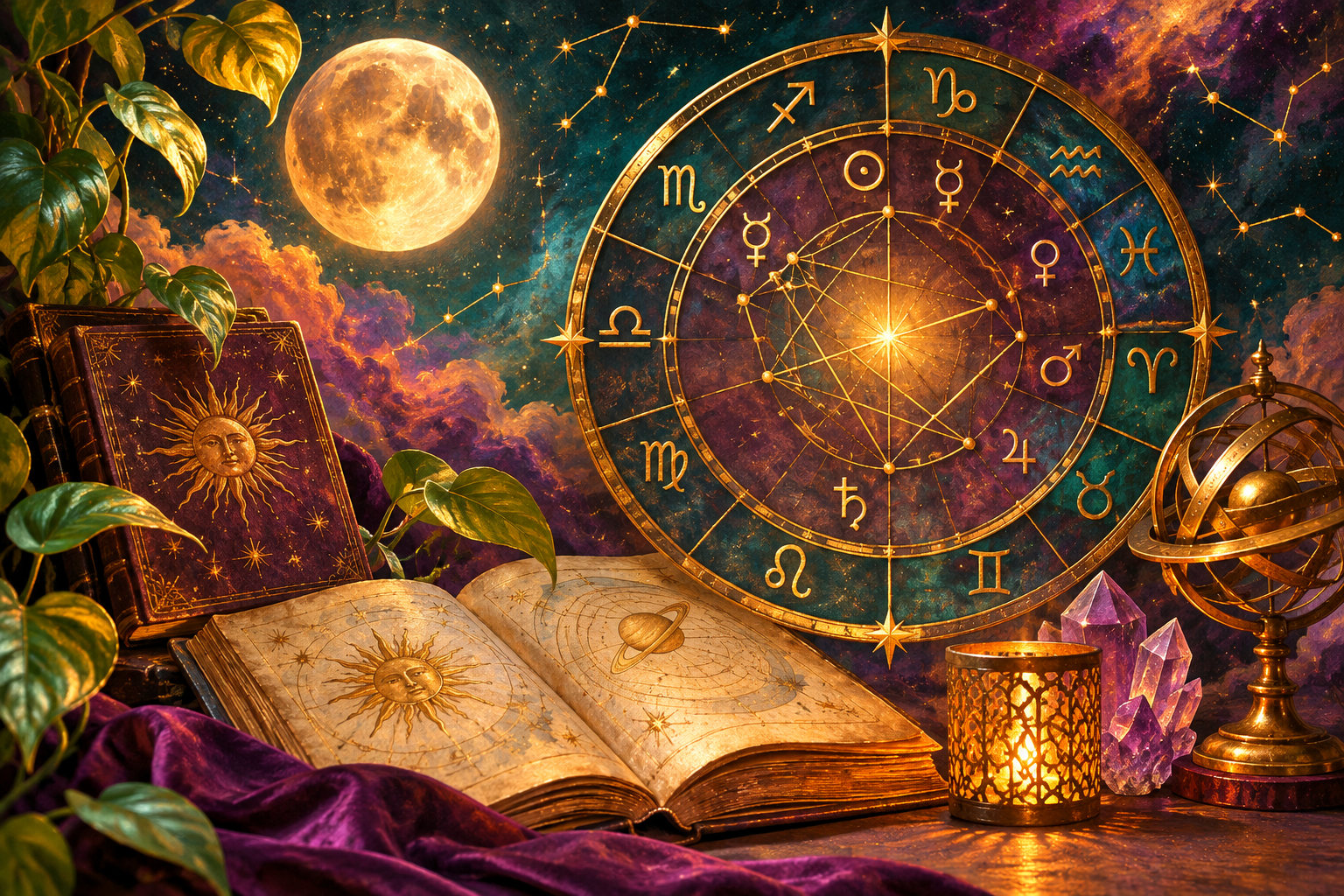


Chart at a Glance
Sun, Moon and Rising
Three familiar placements often serve as an entry point for exploring a natal chart. Each offers a different dimension of interpretation.
Sun Sign
The Sun symbolizes vitality, identity and conscious self-expression. Its placement brings attention to how you experience and express yourself.
Moon Sign
The Moon symbolizes emotions, instinctive responses and your inner world. It invites reflection on what nourishes you and how you experience feelings.
Rising Sign
The Ascendant marks the zodiac sign rising on the eastern horizon at birth. It offers another perspective on how you approach life and new experiences.
Core Chart Components
What Makes Up a Natal Chart?
Planetary placements, signs, houses and aspects work together to create a fuller picture.
Planets
The Sun, Moon and planets represent different energies and functions, including emotions, communication, relationships, motivation and change.
Zodiac Signs
Each zodiac sign contributes qualities and a particular style of expression to the planets and points within it.
Houses
The twelve houses draw attention to different areas of life, such as identity, resources, home, creativity, partnership and community.
Aspects
Aspects describe angular relationships between celestial positions and how their energies connect and interact within a chart.
Birth Information
What Information Creates a Chart?
Birth date, time and location establish the moment and place represented in your natal chart.
Birth Date
Provides the date used to calculate planetary positions.
Birth Time
Helps determine the Ascendant and house placements. An unknown or approximate time may make those positions unreliable.
Birthplace
Establishes the geographic location and local time context used to calculate the chart.
Tropical Astrology
Placidus and Whole Sign Houses
In Tropical astrology, Placidus and Whole Sign use different methods to divide the twelve houses. The planets retain their zodiac signs and degrees in both systems, although their house placements may differ. Each system offers another perspective to explore.
Placidus
Placidus divides houses according to a time-based system, creating house sizes that vary by birth time and location. The Ascendant begins the 1st house.
Whole Sign
Whole Sign uses the entire Rising sign as the 1st house. Each successive zodiac sign becomes the next house, creating twelve equal 30-degree sign-based houses.
Reflection and Discernment
What Does My Chart Invite Me to Explore?
A natal chart is one of many resources I use to consider patterns, deepen my awareness and reflect on what I’m experiencing.
I remain curious about what resonates, what I’m discovering and how I choose to integrate those insights.
- What placements or themes spark my curiosity?
- Where do I recognize these energies in my experiences?
- What am I learning about my relationships, choices and responses?
- How do I want to integrate what I’m discovering?